

I have been on this planet for about six-and-a-half decades, and in all that time, there has not been a single day that some part of the world was not at war. Don’t believe me? Click here.
Some have been major conflicts involving multiple countries. Others have been smaller battles within the borders of a single country or even a specific region of a country. All have delivered massive doses of violence, bloodshed, destruction, and heartbreak.
I imagine if you did enough research, you would find that there has not been a single day since the beginning of human history that some part of the world wasn’t at war. As I write this, there are more than 100 armed conflicts around the globe, according to the Geneva Academy. Here’s a list of some of the countries involved:
Russia, Ukraine, Moldova, Georgia, Armenia, Azerbaijan, Cyprus, Egypt, Iraq, Israel, Libya, Morocco, Palestine, Syria, Turkey, Yemen, Burkina Faso, Cameroon, the Central African Republic (CAR), the Democratic Republic of the Congo, Ethiopia, Mali, Mozambique, Nigeria, Senegal, Somalia, Sudan, Afghanistan, India, Myanmar, Pakistan, the Philippines, India, China, Mexico, and Colombia.
Most of the world does not know or care about the vast majority of these conflicts. When was the last time the world prayed for peace in Burkina Faso, or the Philippines, or Georgia?
With so many conflicts spread across so much of the world at one time, only a few ever grab the global spotlight.
The war between Russia and Ukraine commanded much of the world’s attention in recent years. But that has been supplanted, at least temporarily, by the war between Israel and Palestine, in which we have seen unfathomable levels of violence, cruelty, and inhumanity.
Except that it’s not unfathomable. It’s easily fathomable – because it happens in every war, all the time, across the globe.
People who have not raised a single eyebrow or made the slightest peep over all the other wars in the world are now suddenly angry and indignant over the war in the Gaza Strip. It’s as though they magically awoke one day to discover the horrors of war – but only because this time their people were involved, their cause, their religion, their culture.
That’s always the way, isn’t it? We can train ourselves to ignore the horrors of war – all the way up to the moment that it affects us personally. I suppose I’m as guilty of this as anyone else.
When the entire world rises up en masse to rage against every bullet or bomb fired in anger on the order of those in power, then maybe there will be hope for peace.
But as long as we pick and choose which wars merit our attention, there will be no peace. Never, not ever.
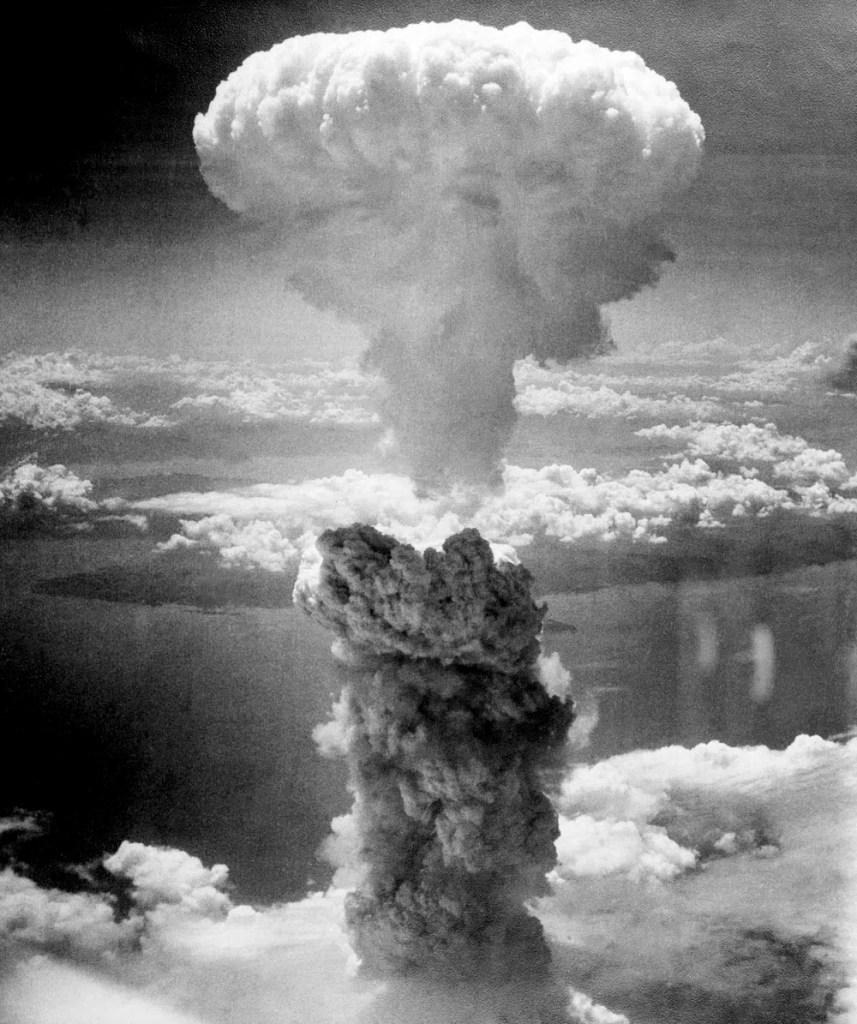
Image: public domain
 Vance Cariaga
Great reminder, Vance. Admittedly, I don’t know about most of these conflicts, and it is tragic learning about them. For example, just the other day I found out about the war in Congo – which seems based on resources (coltan – which is used in manufacturing electronics and other tech).
I have this notion that nations and tribes – left to their own ways, before colonialists went around destroying foreign lands – were happy and at peace, and I wonder what those places would be like if the conquerors had just left them alone. But then again, even in those days, there were tribal conflicts, so I think the elements of aggression and destruction were always there.
It’s just far more pronounced in modern times, with the sick weaponry available, and the means of communication which beams news of such fights globally.
I still believe that humanity – as a whole – is good, and wishes good for others. But it’s when leaders become greedy that things turn nasty.
And it’s sad that there is no real democracy – no voice of the people which is actually heeded by those in power. I see the protests all over the world around this current most-prominent conflict – including half a million in London this past weekend, and the Grand Central protest in your part of the world – yet governments go on following their own agendas…even setting up to massively increase the military funding to those who are doing the killing.
My youngest is watching “The Story of Stuff” (a great little video) for school, and one of the stats put forward was that of the 100 largest economies in the world, 51 of those were corporations (as opposed to 49 being governments). Those stats are probably dated by now, but it still rings true regarding who the actual decision makers are.
Ultimately, it’s sad that the lives of so many are so dependent on the decisions of so few. As long as it remains as such, I don’t think widespread peace will ever be possible.
LikeLiked by 1 person
Thanks for the input, Yacoob. War seems to be the go-to policy among those in charge, even though those in charge are not the ones getting their bodies blown in half — or maybe because those in charge are not getting blown up.
Trying to determine whose innocent lives are worth more than the other’s is an exercise in futility for me because they don’t deserve to be killed, no matter which side of the border they are on. The problem with governments is that they only need half the country to support their policies, if that. I’m convinced that the vast majority of people have a “live and let live” mentality, and just want peace. But until everyone rises up in unison to demand peace, it won’t happen.
It’s just sad and tragic. Nothing I can say besides that. Peace to you and yours.
LikeLiked by 1 person