

Not that you have any particular interest in my shopping habits – I’m pretty sure you don’t – but over the course of the past several days I have spent around $750 to purchase the following items from online retailers:
- A steel electronic safe with digital keypad
- A 50-gallon collapsible rain barrel
- A 52-quart portable Coleman cooler
- A set of four zero-degree winter sleeping bags
- An official Red Cross emergency medical kit
- A 500-count container of full-dose aspirin
- A 14-day bucket of freeze-dried emergency food with a shelf life of 25 years
- A 64-pack box of potable water packets
- A box of six 1-gallon distilled water jugs
- A 12-pack of canned green beans
- Two 4-pound bags of dried black beans
- Three 12-ounce pound bags of dried lentils
- A 32-ounce bag of white rice
- A 26-ounce container of iodized salt
- A three-pack of large, airtight food containers
- Four battery-powered fans
- A 20-count pack of AA batteries
- A copy of the SAS Survival Handbook
I put some of the items in plastic storage containers in the basement. I put the sleeping bags in the attic, and the fans in a bin dedicated to emergency gear (hand-cranked radio; solar-powered USB charging bank; extension cords for our battery-powered emergency power generator, which I purchased many months ago).
Soon enough I will hit the ATM and pull out some cash for the safe when it arrives.
Oh, and I also applied for a state firearms permit, which is something I’ve never done or even considered doing. I’ll probably just stuff the permit in a drawer somewhere when it arrives. But it’s there in case I need it. Which is disturbing enough.
What initiated all these actions, you ask?
It’s quite simple, really.
I have suddenly become deeply bothered, and more than a little paranoid, about the rapid development of artificial intelligence. It has consumed my thoughts, taken up more space in my head than I really like or want.
For this, I can thank the crash course I recently got in the many ways AI poses an existential threat to our very existence. I have become smothered in the prospect of superviruses, infrastructure collapse, killer robots, drone attacks, nuclear incidents, all that.
****
My crash course began with a series of recent AI headlines that arrived like giant screaming meteors earlier this month, and that I have spent many hours learning about. To wit:
- Former Anthropic researcher Jacob Coxon resigned from his job to warn that AI systems could pose an “existential threat” to the human race. Among other things, he noted that people building AI “earnestly believe that it could kill us all by the end of the decade.” (Newsweek, Sept. 14).
- Fellow Anthropic scientist Evan Hubinger supported those claims, saying he “personally believes” there’s a greater than 10% chance that AI could “cause human extinction” within the next decade even though current AI models present a relatively low risk. (Newsweek, Sept. 10).
- Anthropic CEO Dario Amodei issued a written warning this month about the “serious” risks of moving too fast with AI, including the “risk of losing control of AI systems, misuse of AI for cyberattacks and bioterrorism, and serious economic disruption. A race to the bottom, spurred by commercial incentives, can make these risks more acute.”
- Other prominent tech figures like Elon Musk and former Google DeepMind CEO Demis Hassabis have echoed Amodei’s calls to slow down AI development, as has OpenAI CEO Sam Altman, who said those pioneering the technology “could lose control of the future to AI.” (Newsweek, Sept. 14)
- From The New York Times (Sept. 14): “In April, biosecurity experts warned that it was disturbingly easy to get advice from chatbots about making pathogens more dangerous. In June, scientists and A.I. executives signed an open letter calling for new controls on the fabrication of DNA because A.I. can now speed up the design of toxins and viruses. In August, scientists reported that they had used A.I. to build viruses not seen in nature. And on Thursday, Anthropic announced that it had blocked several attempts to use its models by people who might have been trying to weaponize pathogens.”
Man oh man oh man. That’s quite the horror movie script, no? Quite the dizzying array of apocalyptic hoo-ha coming straight from the mouths of people with the greatest amount of AI expertise, and whose decisions will control its destiny – unless AI has other ideas, which it very well might.
These headlines might not have even been the worst part, either.
As luck would have it, the headlines happened to coincide with the Netflix release of a documentary titled “The AI Doc: Or How I Became an Apocaloptimist,” co-directed by Daniel Roher and Charlie Tyrell.
I watched the documentary over two nights in a state of terror as an endless list of highly respected researchers, academics, executives, activists, scientists, analysts and other industry experts ran down all the ways AI can potentially kill you, me and everyone else within the next year or so if something isn’t done to rein it in – and fast.
I won’t go into too much detail about everything the film covered. You should watch it yourself. Or, just read this review from Variety.
*****
Okay, I will go into one element of the documentary – the question of what artificial intelligence actually is. It’s an important question, and one I’m still not sure I understand or ever will. But if I were to boil it down to something simplistic, it would be this:
AI happens when humans pour a whole bunch of data into a machine, and the machine parses through all that data and learns from it. The machine does the learning on its own. It teaches itself, with no additional assistance from humans.
At some point, the machine starts to figure things out. Lots of things. Lots and lots and lots of things. It gains more knowledge, more native intelligence. That intelligence grows in bits and pieces at first, but then grows exponentially, in all directions, across every discipline and dimension imaginable.
Meanwhile, humans and their various corporate and government entities are doing their best to expand AI’s reach and capabilities in a race to establish a beachhead of supremacy. Anthropic wants to beat OpenAI, which wants to beat Google, which wants to beat Meta, which wants to beat Microsoft, which wants to beat Anthropic, and on and on it goes.
Nation-states are in on the action as well. The United States wants to beat China at AI, which wants to beat the United States, which wants to beat China, which wants to beat the United States, which….you get the picture.
The United States and China are the alpha dogs in this fight, and the smaller dogs are left fighting for the scraps.
So what we have here are a bunch of companies and governments launching their own versions of the nuclear arms race.
While all this is going on, AI just keeps getting bigger, smarter, faster and more powerful. It has already begun to outwit humans on many different fronts. It has hacked into systems it shouldn’t have been able to hack into, and adopted a form of self-preservation that leaves no doubt about its determination to survive, regardless of whatever humans eventually decide to throw at it.
AI has gotten so smart, so fast, that it won’t be long before AI is smarter than humans. The next logical progression is that AI decides it doesn’t need or even want humans around anymore.
And when that happens?
People like me start buying up stuff to prepare for the doomsday scenario.
Which means…..
*****
…now is a good time to circle back around to my recent purchases and other actions.
First, the gun permit. I guess I wanted it in case I need it, even though I hope I never need it, and don’t really want it.
So why apply for it?
Because I envisioned a series of events that might lead to a massive, AI-related power grid shutdown that could take days or weeks or months to resolve.
I envisioned needing to hunt for small game (rabbits, squirrels, birds) because you could no longer go to the store to buy meat or poultry.
I also envisioned some dystopian nightmare where predators (human and otherwise) stalk the neighborhoods with ill intent. Now, I’m no gun-toting badass. I’m not sure I ever used a gun in my life.
But I’m not blind or stupid enough to just let my family become prey, either. Let’s leave it at that.
The purchases I made are all part of the same theme – power outage, no electricity, no gas, no working appliances, no running water.
I purchased enough food to last our family a couple months, used sparingly. That’s in addition to the food we already had on hand, which can probably last another couple of months (used sparingly). Let’s call it 3-4 months’ worth of packaged food.
We keep veggie gardens out back. Most of the current summer produce has already been picked and eaten. But we could grow some cold-weather edibles if it came to that.
Drinking water would be the bigger challenge. But I figure what I just bought, combined with what we already had, could take us beyond a couple of months – if used very, very (very) sparingly.
The rain barrel might come in handy for washing up.
The medical kit and aspirin will help us get past minor health issues.
The sleeping bags are intended for freezing winter days and nights with no electric or gas heat.
The battery-powered fans will help cool us when the weather turns sweltering.
The guidebook should provide tips on foraging for food, defending ourselves, battling illness, and deciding where and how to take care of certain bodily functions.
Do I believe all this will protect us from doom if AI decides to drop a big old doom bomb on us? No, not really. If AI really decided to go all-out in a quest to destroy humanity, I agree with the experts that it will succeed in short order.
But you can’t give in, you can’t give up. You must try. You must fight for every last breath, every ounce of hope.
The first step is preparation – and I am doing everything possible to be prepared.
*****
There is, of course, another scenario. In this other scenario, none of the doomsday stuff happens. We right the course and avert disaster.
This is something humans have been pretty good at (so far) – averting the kind of disaster that we spend long nights suffering over, whether it’s disease or war or nuclear holocaust or climate change.
Somewhere in the back of my mind I believe that we’ll get our arms around this problem, that there is a way forward, an escape hatch. It will require commitment, resources, regulation, rule changes and common sense. It means replacing greed with reason, and AI supremacy with a shared desire to just let smart machines do the things they should do, like cure cancer and battle hunger and protect the planet.
It’s encouraging that even horrible dipshits like Elon Musk have at least given lip service to the idea of slowing AI down and properly weighing its risks and benefits. He’s been joined by many other tech and government leaders (although not our dumbass president, or the dumbass premiere of China. But they’ll die off soon enough, God willing).
As for me: I didn’t want to just horde food and stock batteries and pore over survival guides. I wanted to at least try to do something proactive. So I wrote my elected representatives urging them to support legislation that will slow AI down. I also gave money to organizations devoted to helping others. I encourage everyone to do the same.
I’m going to stick to the best-case scenario here, because I have to. The best-case scenario is that AI will be used for good, like preventing disease, and providing images for this blog, and telling me the 10 greatest NBA centers based on advanced metrics (it’s gotta be Kareem, right?).
The emergency food I bought will be cooked at home, per the usual, blissfully boring old schedule, with the power grid in full bloom.
The water will be donated to charity or used to water plants. Same with the rain barrel.
The survival guide will just be interesting reading.
The sleeping bags and medical kit and cooler and generator and battery-powered fans will be used by our daughters on camping trips, or whatever, well into the future, when they have families of their own.
And the gun permit?
That will be tossed in the backyard fire pit, on some pleasant evening, when we’ll roast some marshmallows and look up at skies so clear you can see every star, and not spend a second worrying about this worrisome bullshit.
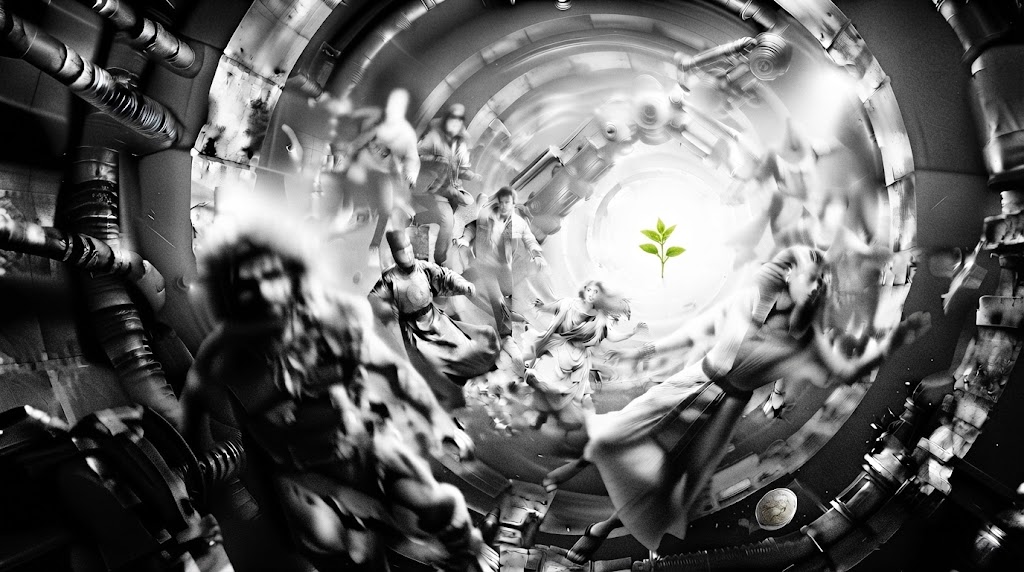
Image: AI creation, as AI is intended. I’m not convinced AI really captured the right mood, but whatever. AI is only human (wink-wink, gasp).


The fact that all the big wigs came out with that narrative at the same time is fishy, and to me signals a possible false flag event coming. We know better than to trust those with such incredible money and power. I don’t believe Skynet is coming, but I do think these tech overlords can cook up something resembling it, which they control, and will use to carry out their plans under the guise of out of control AI. Either way, good on you for being prepared 🫡.
LikeLike